



10 Real-World AI Agent Use Cases
Explore 10 practical AI agent use cases across agriculture, content creation, disaster response, healthcare, finance, supply chain, and more.


Guides about rapid evolution of AI, coding agents, and exactly what's moving the industry forward.


Explore 10 practical AI agent use cases across agriculture, content creation, disaster response, healthcare, finance, supply chain, and more.


Learn the five layers of the AI stack—Infrastructure, Models, Data, Orchestration, and Applications—and how they work together to build modern AI systems.


Learn what multimodal AI is, how native multimodal models work, the difference between feature-level fusion and shared vector spaces, and why multimodality is shaping the future of AI.
Join thousands of developers shipping better software with our AI-powered coding assistant.
Start for Free


Learn what vector databases are, how embeddings work, and why modern AI systems use vector search to find information based on meaning instead of keywords.


Learn the top security risks facing Large Language Models, including prompt injection, data poisoning, model theft, system prompt leakage, and denial-of-service attacks.


Learn what prompt tuning is, how soft prompts work, and why prompt tuning is becoming a faster and cheaper alternative to fine-tuning large language models.
Join thousands of developers shipping better software with our AI-powered coding assistant.
Start for Free


Learn what test-time compute is, how reasoning models think before answering, and why spending more compute during inference can make AI models smarter.


Learn the biggest security risks facing AI agents, from prompt injection and memory poisoning to rogue agents and cascading failures.


Learn what OpenClaw is, how it works, and why it has become one of the fastest-growing open-source AI agent projects.
Join thousands of developers shipping better software with our AI-powered coding assistant.
Start for Free


Learn what an AI harness is, how coding agents work, and why the harness often matters more than the model itself.


Learn the four types of AI agent memory—working, semantic, procedural, and episodic—and how they help agents reason, learn, and perform complex tasks.


Learn what AI agents are, how they differ from traditional LLM systems, and how reasoning, tools, memory, and planning create autonomous AI workflows.
Join thousands of developers shipping better software with our AI-powered coding assistant.
Start for Free


Learn the difference between prompt engineering and context engineering, and how RAG, memory, tools, and AI agents create smarter AI systems.


Learn what a context window is, how LLMs remember conversations, why tokens matter, and the tradeoffs behind long-context AI models.


Learn the difference between AI agents and LLMs, when to use each one, and why simple prompts often outperform complex autonomous systems.
Join thousands of developers shipping better software with our AI-powered coding assistant.
Start for Free


Learn the difference between CLI and MCP, why AI agents use both, and when command-line tools outperform structured MCP servers.


Building AI agents requires much more than prompt engineering. Learn the seven core skills behind production-ready agent systems.


Learn what vibe coding is, how AI coding agents work, and how to safely build production-ready software with agentic AI workflows.
Join thousands of developers shipping better software with our AI-powered coding assistant.
Start for Free


Learn what AI agent skills are, how progressive disclosure works, and why skills became an open standard across coding agents like Claude Code and Codex.

Gemini 3.5 Flash combines fast inference, strong agentic workflows, multimodal coding, and surprisingly creative front-end generation in a way previous Google models never fully did.


RAG vs long context is becoming one of the biggest architectural debates in AI. Here’s why retrieval still matters in 2026 — and where long-context models are replacing it.
Join thousands of developers shipping better software with our AI-powered coding assistant.
Start for Free


Learn how prompt caching works in LLMs, why it reduces latency and cost, and how modern AI systems reuse cached context instead of recomputing prompts.


Learn 20 essential AI and LLM terms including transformers, RAG, MCP, fine-tuning, agents, vector databases, and reasoning models explained simply.


Why open models struggle in coding agents, how harness engineering changes coding performance, and how Command Code approaches orchestration for open-source models.
Join thousands of developers shipping better software with our AI-powered coding assistant.
Start for Free


Learn the difference between MCP and RAG, how AI agents retrieve knowledge vs execute actions, and why modern AI systems increasingly use both together.

Learn the difference between open-weight and open-source AI models, why licensing matters, and which recent LLMs are truly open.


Agentic PR review with Command Code helps developers move from scattered AI feedback to faster, clearer shipping decisions.
Join thousands of developers shipping better software with our AI-powered coding assistant.
Start for Free
Open AI models and autonomous agents are reshaping SaaS by reducing vendor lock-in, weakening seat-based pricing, and making intelligence cheaper and portable.

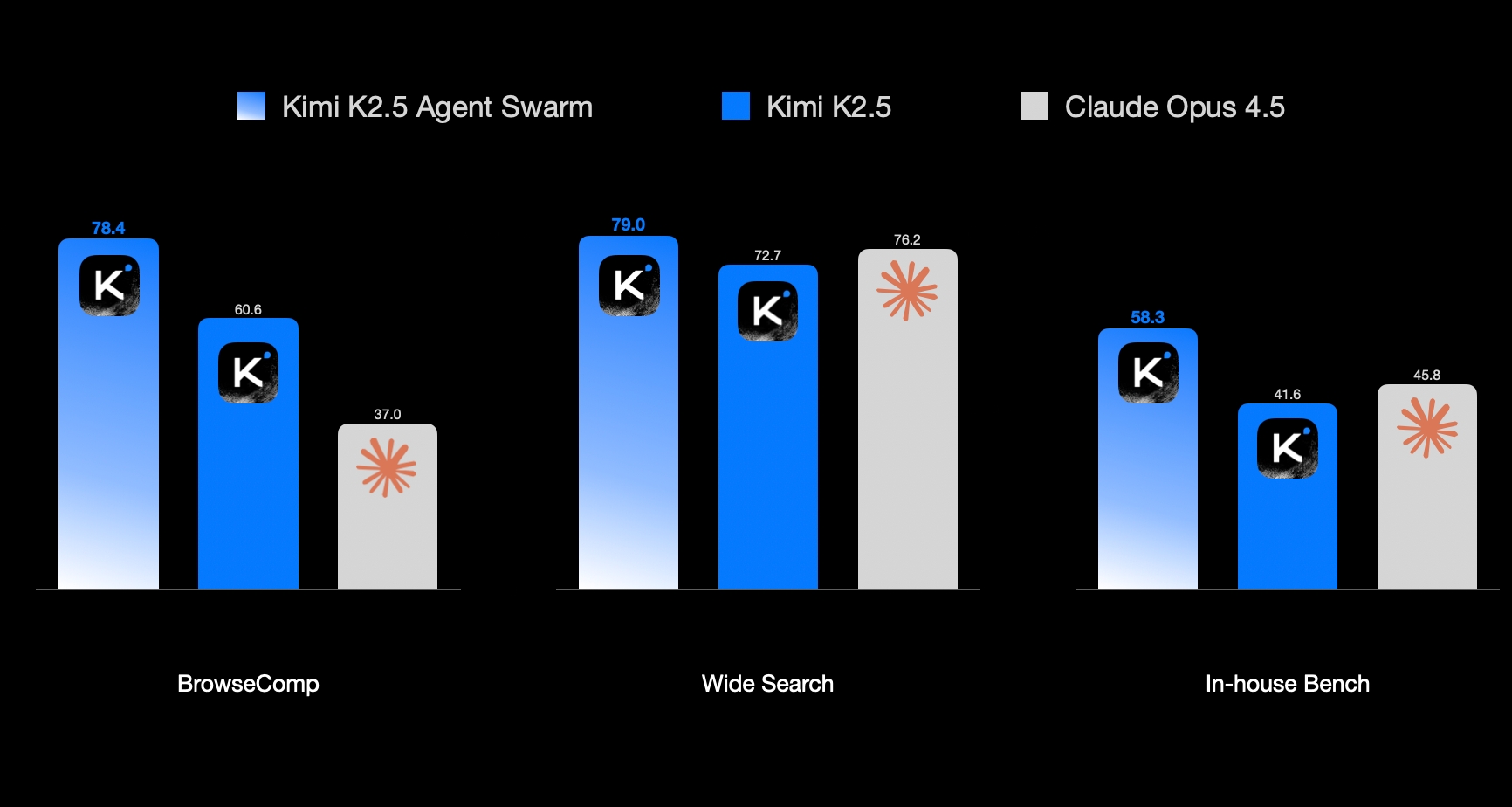
Kimi K2.5 is a 1 trillion parameter model that is the most interesting coding model released in 2026. It is open-source and can be used to get stuff done.