
For years, the SaaS business model looked untouchable. Build software once. Charge per seat forever. Lock customers into subscriptions. Scale to massive margins.
That model created some of the largest software companies in history:
- Adobe
- Salesforce
- ServiceNow
- Shopify
But AI is starting to challenge the core assumption behind SaaS itself:
What happens when software no longer needs a human seat?
That’s the shift happening right now.
And open models are accelerating it faster than most people expected.
The Real Threat to SaaS Isn’t AI Chat
It’s Autonomous Software Execution
Most people still think AI is mainly about chat interfaces.
But the real disruption comes from agents.
AI systems are no longer just generating text. They’re increasingly capable of:
- Writing code
- Running workflows
- Managing tasks
- Reviewing systems
- Coordinating tools
- Automating operations
That changes the economics of software completely.
Traditional SaaS pricing depends on human usage:
- Per-seat pricing
- Per-user subscriptions
- Workflow ownership
- Vendor lock-in
But autonomous agents reduce the need for humans interacting directly with software.
And if AI agents replace the workflows humans used to perform manually, companies don’t need more software seats.
They need fewer.
Potentially far fewer.
Why Open Models Matter More Than Closed Models
Closed frontier models still dominate headlines.
Models from:
- OpenAI
- Anthropic
continue pushing reasoning and coding capabilities forward rapidly.
But the bigger long-term shift may actually come from open models.
Because open models attack one of SaaS’ biggest advantages directly:
Vendor dependency.
If companies can self-host highly capable AI systems internally, they no longer need dozens of specialized SaaS tools.
Instead of renting software forever, they can increasingly generate, customize, and orchestrate workflows themselves.
That changes the economics dramatically.
Open Models Are Catching Up Fast
One of the biggest assumptions in AI last year was:
Closed models would stay permanently ahead.
That gap is shrinking quickly.
Recent open-weight releases are becoming competitive with frontier closed systems in coding, reasoning, and agentic workflows.
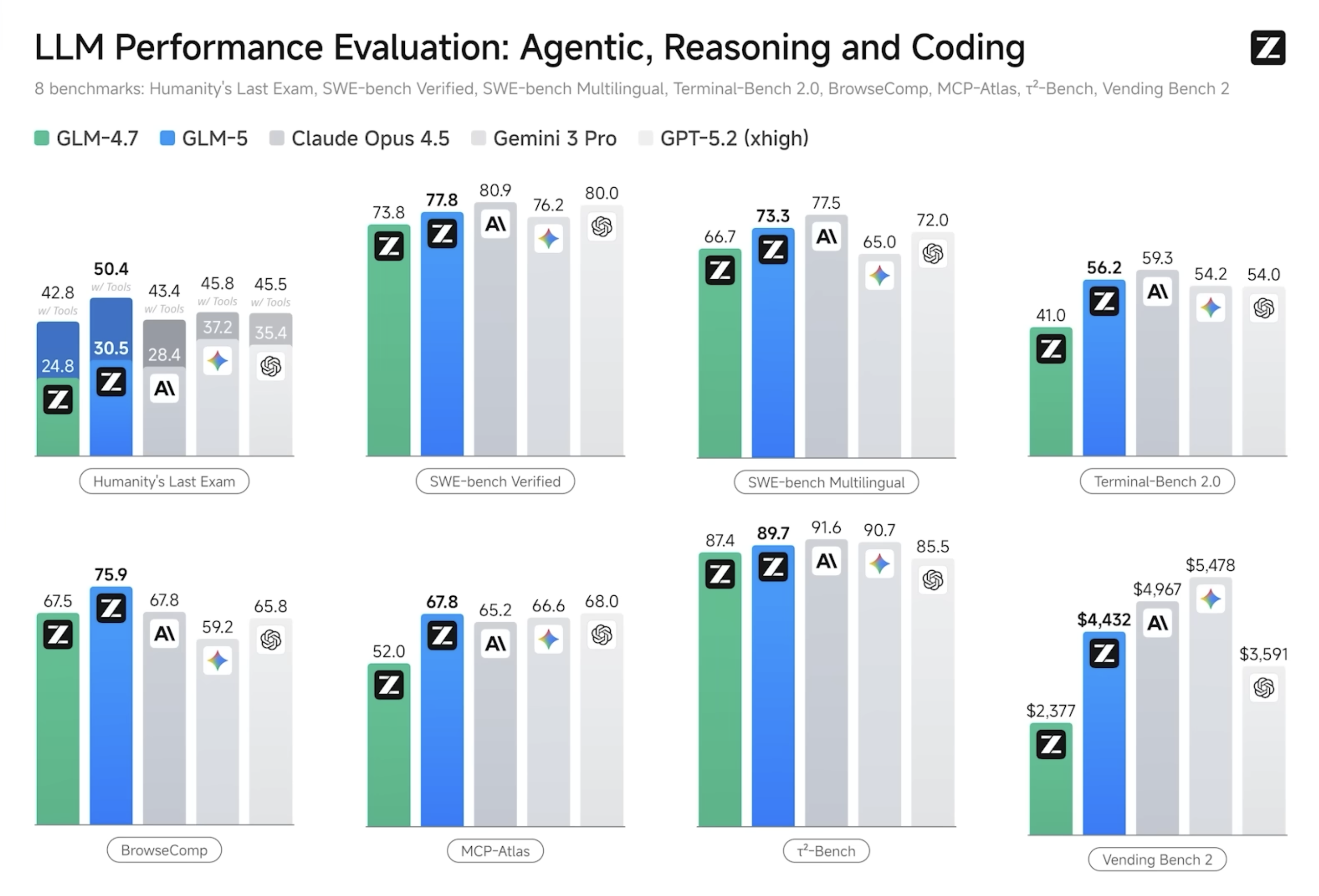
Models like:
- Alibaba’s Qwen 3 Coder Next
- Z.ai’s GLM-5
- Minimax M2.5
are increasingly capable of handling:
- Long-horizon reasoning
- Systems engineering
- Multi-step agentic tasks
- Autonomous coding workflows
And importantly:
They can often run behind private infrastructure.
That matters enormously for enterprises.
Because it means companies can deploy their own “developer brain” internally instead of paying recurring SaaS costs across multiple vendors.
SaaS Depends on Seat-Based Pricing
AI Agents Break That Model
Traditional SaaS economics are built around humans interacting with interfaces.
The more employees using software, the more seats get sold.
But AI agents change software consumption entirely.
An autonomous coding agent doesn’t need:
- A dashboard
- A CRM UI
- A design interface
- A ticketing workflow
It interacts directly with APIs, repositories, tools, and infrastructure.
That means companies may no longer pay for:
- 10 developers using tools manually
- 20 analysts updating dashboards
- Large operational teams moving information between systems
Instead, they may orchestrate workflows through a smaller number of intelligent agents.
This is the part investors are starting to notice.
When intelligence becomes abundant, software stops charging per human.
And once seat-based pricing weakens, SaaS margins come under pressure.
Open Models Reduce Vendor Lock-In
This is where open models become especially disruptive.
Historically, SaaS companies relied heavily on lock-in:
- Proprietary workflows
- Closed ecosystems
- Expensive migrations
- Specialized tooling
But open-weight AI models reduce switching costs significantly.
Why rent multiple specialized AI-powered tools when one capable open model can increasingly replicate those workflows internally?
A self-hosted coding model can:
- Generate internal tools
- Rebuild workflows
- Automate repetitive operations
- Customize systems dynamically
That makes the traditional SaaS moat much weaker.
Especially when open models keep getting cheaper.
Cheap Intelligence Changes Everything
Another major shift is pricing.
Top-tier reasoning used to require expensive enterprise subscriptions and large compute budgets.
Now smaller open models are approaching frontier-level capabilities at dramatically lower cost.
That changes accessibility completely.
Instead of needing:
- Large enterprise contracts
- Premium AI subscriptions
- Heavy SaaS stacks
developers and companies can increasingly run advanced AI locally or through inexpensive infrastructure.
Intelligence becomes portable.
And portable intelligence is dangerous for centralized SaaS platforms.
The Real Battle Isn’t Models
It’s AI Orchestration and the Harness
This is the part many people still underestimate.
The long-term competition in AI may not be:
Which company has the smartest model?
Instead, it’s increasingly becoming:
Which platform can orchestrate autonomous work best?
Because model capability alone is no longer enough.
The orchestration layer, the harness, is becoming the differentiator.
That’s especially visible in coding workflows.
A common criticism of open models is:
“Open models can’t tool-call.”
But that’s increasingly false.
They can.
Most coding agents simply weren’t built to orchestrate them properly.
The real limitation is often the harness itself:
- Poor context management
- Weak tool orchestration
- Bad parallel execution
- Inefficient memory handling
- Slow feedback loops
That’s why open models frequently underperform inside generic coding agents while performing dramatically better inside systems designed specifically for agentic orchestration.
This is where platforms like Command Code become important.
Inside Command Code’s coding harness, open models perform close to — and sometimes better than — frontier closed models for real-world development workflows.
Because the system is optimized around:
- Tool usage
- Agent coordination
- Context handling
- Parallel execution
- Autonomous workflows
That changes the equation completely.
The battle stops being:
“Open vs closed.”
And becomes:
“Who built the best orchestration layer?”
//Choose your plan
Ready to make Command Code your coding stack?
Start with transparent pricing, open models from $1/mo, and free credits built in. Pick the plan that fits how you code.
Similarly, world-model systems like those being explored by Waymo demonstrate how AI can simulate environments, predict outcomes, and make operational decisions autonomously.
Once those capabilities extend into business operations, many traditional SaaS dashboards begin looking less valuable.
Because instead of visualizing data for humans to interpret:
AI systems increasingly interpret and act on the data directly.
And as orchestration or harness improves, the gap between open and closed models continues shrinking faster than most SaaS companies expected.
What This Means for Developers
This doesn’t mean software disappears.
And it doesn’t mean developers become irrelevant.
But it probably does mean the SaaS landscape changes dramatically.
The future likely shifts from:
- Static software products
- Human-operated interfaces
- Seat-based subscriptions
toward:
- AI-native workflows
- Autonomous orchestration
- Self-hosted intelligence
- Agent-driven operations
The developers who adapt fastest will likely focus less on building isolated CRUD apps and more on:
- AI orchestration
- Agent workflows
- Tool integration
- Infrastructure automation
- Human-AI collaboration systems
Because the opportunity isn’t disappearing.
It’s shifting layers.
AI increasingly monetizes outcomes instead.
That’s a very different business model.