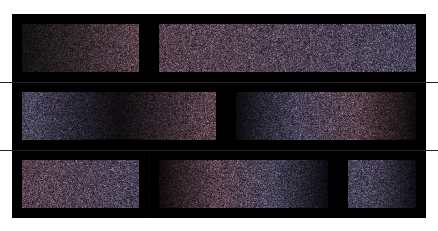
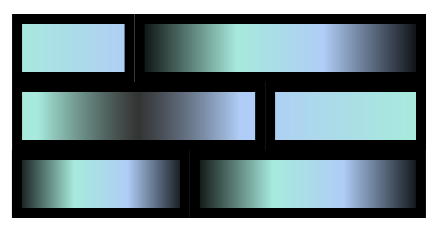
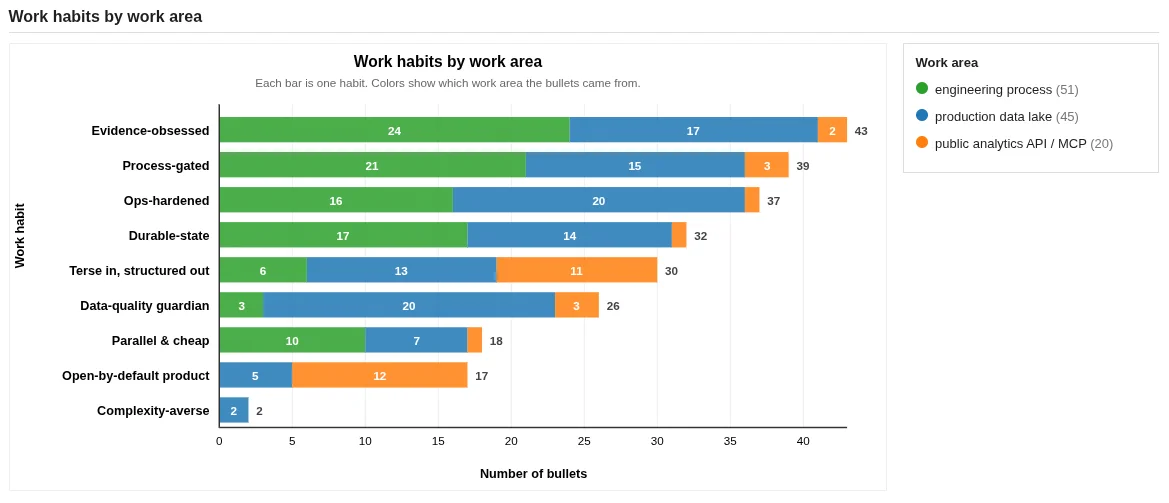
"Taste can be used between multiple workstreams. The chart shows this distinction exactly by separating 'engineering process' from 'production data lake' although they share a lot of common overlaps." — Evan, agents and evals engineer
The developer
Evan works on agents, evals, and data infrastructure. His work spans two distinct contexts: engineering process (how code gets built and shipped) and production data lakes (how data gets stored, queried, and served). Both involve code, tooling, but the preferences and patterns in each are different.
- Builds: agentic tooling, evaluation frameworks, data pipelines
- Stack: AI/ML, evals, data engineering
- Find them: Originial Post on X
What changed
Evan uses Command Code across both workstreams. Over time, the taste feature learned his preferences and surfaced a pattern: his engineering process work and his production data lake work, while overlapping in tools and language, have distinct conventions. The taste system learned to separate them.
The chart shows this distinction clearly, mapping where the two workstreams share common ground and where they diverge.
In their words
"Here is what @CommandCodeAI has learned about my 'taste' in August: Taste can be used between multiple workstreams. The chart shows this distinction exactly by separating 'engineering process' from 'production data lake' although they share a lot of common overlaps."
— @EvanDeKim on X, Sep 3, 2026
Why this matters
Taste is designed to learn how you code and adapt to it. Evan's case shows it works across contexts: when a developer switches between different workstreams in the same tool, taste learns the boundaries without being told. That's the point. You shouldn't have to re-explain your preferences every time you shift context.